Have you ever spent a hot summer day in Grant County, drifting near sparkling waters, and wondered about the story behind Billy Clapp Lake? This iconic lake isn't just a favorite local getaway— it’s a living testament to the bold vision and
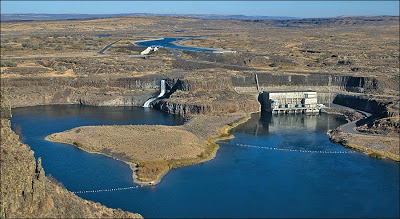
relentless drive of William “Billy” Clapp, a philanthropist and lawyer whose imagination, innovation and persuasive nature helped transform the Columbia Basin into a thriving agricultural destination.
What was described as an idea stoked around a woodstove in 1917, in a small law office in Ephrata, WA, William M. (Billy) Clapp and a few others discussed the potential for the Columbia Basin to feed a nation. The only problem? No Water. This post-World War I discussion led to what is now referred to as the Columbia Basin Reclamation Project. This project stands as a canonical example of how vision, local advocacy, and intergovernmental coordination can mature from speculative concept to nation-shaping public works. William “Billy” Clapp’s regional insight, institutional strategy, and coalition-building helped move the Grand Coulee from an improbable idea to a cornerstone of western water law, federal reclamation policy, and basin-scale economic development.
The proposal to impound and elevate the Columbia River flows for irrigation were initially greeted with skepticism due to technical doubts, fiscal caution, and political hesitation. In this milieu, the Grand Coulee concept—anchored by the idea of a large mainstem dam with integrated hydropower to cross-subsidize irrigation—was both ambitious and controversial. Initial proposals contended with an entrenched river development paradigm focused on navigation and piecemeal irrigation works, not a vertically integrated powerhouse-irrigation system.
With the assistance of a few others, Billy Clapp was able to effectively articulate how a federal reclamation model could lawfully encompass a power-first dam to finance irrigation through power revenues, thereby aligning reclamation objectives with the emergent federal power policy. This framing was critical to overcoming the “who pays” objection and cementing a lawful nexus between Title I irrigation purposes and power development under federal statute. Clapp forged a credible, cross-disciplinary case—a prerequisite for federal authorization and appropriation in a skeptical political environment.
William “Billy” Clapp’s imprint on the Columbia Basin Reclamation Project is not simply historical—it is methodological. By giving legal structure to an engineering vision, and by convening a coalition that included W. Gale Matthews, A. A. Goldsmith, Paul D. Donaldson, and Norval Enger, Clapp helped carry Grand Coulee from conjecture through skepticism to reality. The resulting transformation of the Columbia Basin exemplifies how legal strategy, finance, and public purpose can align to deliver generational infrastructure. It’s a simple reminder that lawyers from small towns with big ideas can accomplish great things.
"Columbia Basin Project” Clapp: A River Champion." Accessed November 12, 2025.
https://www.historylink.org/file/21312,“Bill Clapp, lawyer and St. Croix River “Lake Roosevelt: The Story of the Columbia Basin Project”
https://www.nps.gov/parkhistory/online_books/dams/columbia_basin/sec8.htm.
is an attorney based in Ephrata, Washington who is passionate about educating the public regarding civics and the courts.


